Outliyr's Independent Spectrometer Tests Find Popular Red Light Therapy Devices Delivering From 67 Percent to Nearly Triple Their Advertised Power
Outliyr's free public database catalogs more than seventy red light therapy panels and other light therapy devices, and publishes its own spectrometer measurements next to manufacturer claims for the units it has tested hands-on, seven so far.
Austin, TX - July 8, 2026-- Two light therapy devices tested on a calibrated spectrometer at the same twelve-inch distance their manufacturers advertise returned numbers far from the spec sheet: a full-spectrum lamp measured nearly three times its published irradiance, while a red and near-infrared panel delivered as little as 67 percent of its advertised figure. The readings come from a new public testing database from Outliyr that places independent instrument measurements next to the marketing claims shoppers currently rely on.
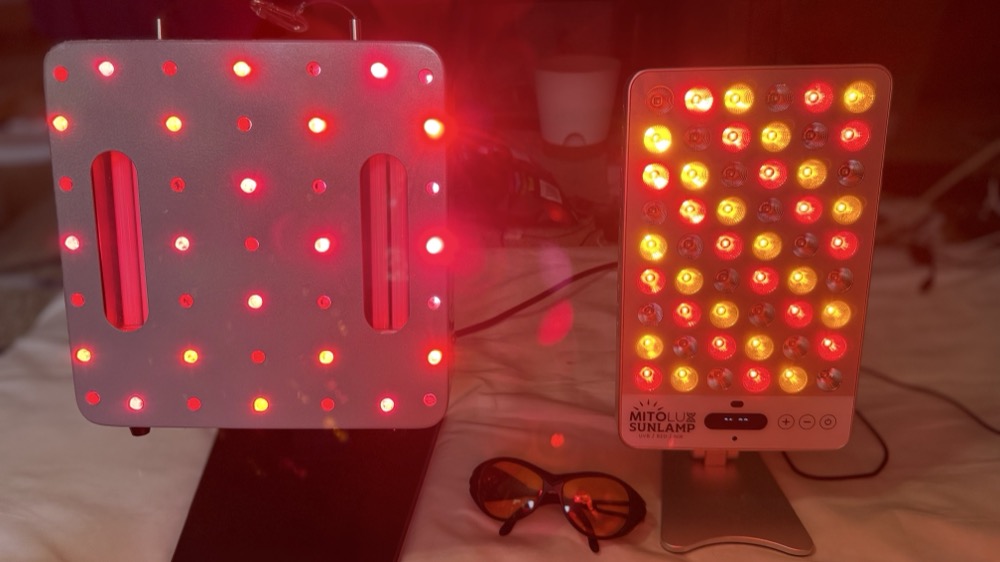
Red light therapy panels under test at the Outliyr lab, where measured irradiance is checked against each maker's advertised figure.
Red light therapy buyers spend anywhere from a few hundred to several thousand dollars largely on one number: irradiance, the measure of how much light a device delivers. Almost no brand publishes an independent measurement of it, and the first like-for-like comparisons suggest the advertised figures can miss in either direction, often falling short.
The database catalogs more than seventy light therapy devices, most of them red and near-infrared panels and wearables, and publishes Outliyr's own spectrometer measurements for the units it has tested hands-on, seven so far, with more in testing. Each tested device lists measured irradiance at a standardized twelve-inch distance, peak wavelengths, electromagnetic field readings, flicker behavior, and price, so a shopper can compare on measured data instead of marketing copy.
"Brands compete on one number, and hardly any of them let you verify it," said Nick Urban, founder of Outliyr, a CHEK Functional Health Coach and a School of Biohacking Instructor. "I bought a two-thousand-dollar spectrometer and started measuring panels myself. Some miss their numbers. Some beat them. Either way, the shopper deserves the measured figure before spending a thousand dollars on the advertised one."
Testing follows a published protocol built on five instruments: a Hopoocolor OHSP350IR spectroradiometer for irradiance and full spectral output, a Hopoocolor HPCS330P flicker analyzer, a Cornet ED88T Plus EMF meter, a Satic Shield EMI meter that reads dirty electricity in Graham-Stetzer units, and a wall-power meter for electrical efficiency. All sit inside the Outliyr Testing Lab, a public registry of 20 calibrated instruments across 10 measurement domains, whose thermal-imaging camera and digital oscilloscope also measure each panel's heat distribution and power-supply integrity. Each panel is measured at five points in a cross pattern (center, top, bottom, left, and right) after a fifteen-minute warmup in a blackout environment, and tested devices are re-measured on a six-to-twelve-month cadence.
The database is free to browse in the light therapy device comparison database, and the full testing methodology and equipment list is public. Red light devices that are tested hands-on can also earn an Outliyr Verified record, a public, code-verifiable ledger of the measured data. The complete dataset, with custom data slices and commentary for reporters, lives in Outliyr's open data library, free to republish with attribution.
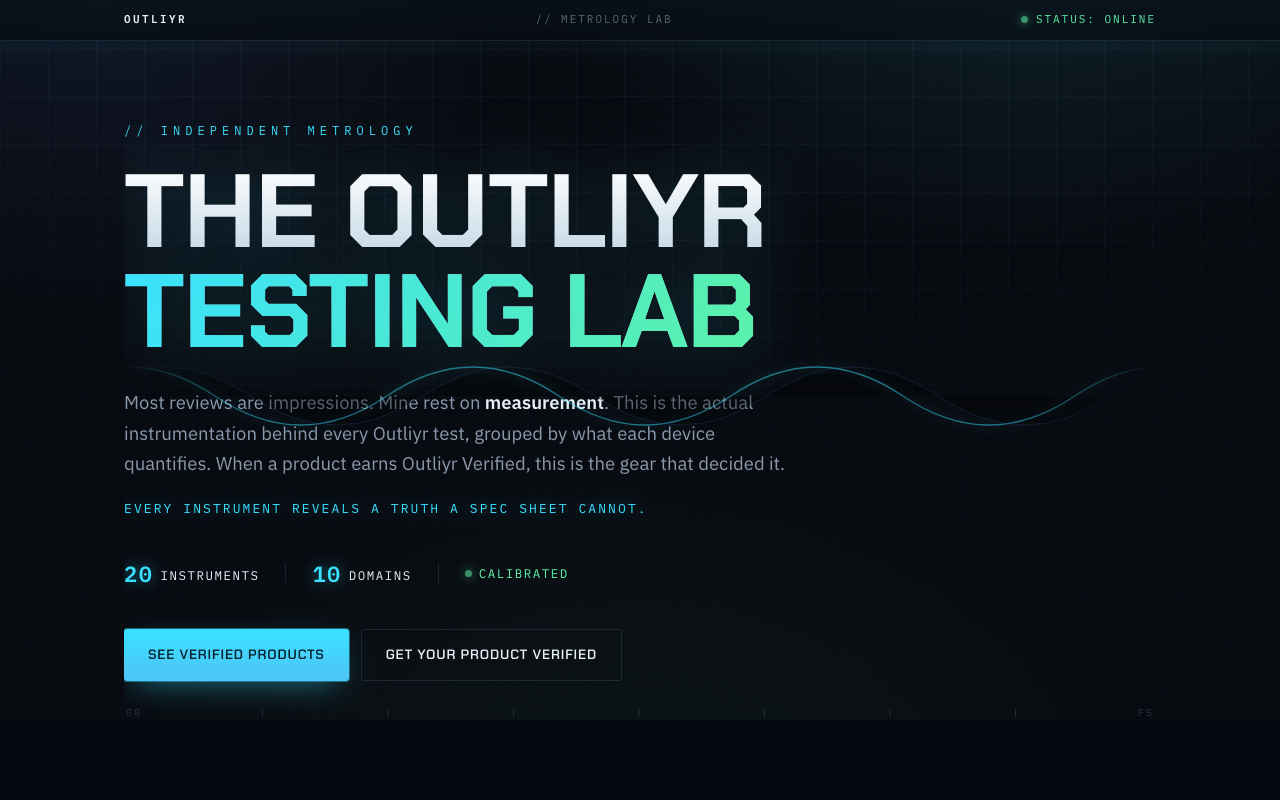
The Outliyr Testing Lab: 20 calibrated instruments across 10 measurement domains behind every tested device.
